Software Budget 2026: What Quality Development Really Costs
Software Budget 2026: What quality development really costs
December is that time of year when everyone plans budgets for the next twelve months. And if you have a digital project in mind – an app, a platform, management software – you're probably wondering: what will it really cost me?
The answer you find online? Confusing at best. Some tell you €10,000, others €100,000, others "it depends". And technically they're all right, which doesn't help at all.
The problem is that software development costs are anything but linear. And above all, there are hidden costs you only discover later, when it's too late to turn back. Those can blow up your initial budget by 50-100%.
Let's talk straight:
what does quality software development really cost in 2026?
The misunderstood costs nobody tells you about (but you'll pay anyway)
When you ask for a quote to develop an app or platform, the number they give you covers pure development. Writing code, building features, testing. But that's just the beginning.
- Infrastructure and hosting: cloud servers, databases, storage, CDN. For an average app we're talking €200-500 per month (€2,400-6,000 per year). And they grow with users.
- Third-party services: authentication, payments, email, analytics, push notifications. Realistic budget: €1,500-3,000 annually.
- Certifications and compliance: GDPR, SSL certificates, security audits. Another €1,000-2,000 per year.
- Professional design and UX: Wireframes, prototypes, user testing. €3,000-8,000.
- Project management: someone has to coordinate everything. If it's not explicitly included, either you're paying for it hidden, or it's not there. And if it's not there, prepare for chaos.
Done the math?
A project quoted at €30,000 for development can easily become €40,000-45,000 in the first year. And nobody tells you that at the beginning.
Realistic breakdown: cost by project type
MVP (Minimum Viable Product) – Budget: 15.000-30.000€
- What you get:
3-5 core features, functional design, one platform (web only or mobile only), essential backend, 2-3 months of development.
- When it makes sense: You're validating an idea, have a limited budget, want to test the market before investing heavily.
Complete product – Budget: 40.000-80.000€
- What you get: 10-15 robust features, polished design, web app + mobile app, scalable backend, integrations with third-party services, 4-6 months of development.
- When it makes sense: You've validated the idea, know there's a market, want to launch a competitive product.
Enterprise platform – Budget: 100.000-250.000€+
- What you get: Complex system with dozens of features, scalable architecture, multiple interfaces, complex integrations, enterprise-grade security, 9-18 months of development.
- When it makes sense:
Software is your core business, you need absolute performance and reliability..
Italy vs outsourcing: the transparent comparison
Let's talk about the elephant in the room. Where you develop makes a huge difference in costs.
- Italian internal team: €60,000-80,000 per year for senior developer (all included). Direct control but very high fixed costs even when the project slows down.
- Italian freelancers: €400-600 per day (€50,000-75,000 for 3 months full-time). Flexibility but limited availability and no continuity guarantee.
- Italian software house: €60,000-120,000 for medium projects. Complete team but high costs with 40-60% margins and longer timelines.
- Managed outsourcing (Huulke model): €2,000-2,200/month per senior developer (€18,000-20,000 for 3 months). 50-70% savings with Italian coordinator who manages everything, total flexibility, already trained team.
For an SME or startup, managed outsourcing is definitely the best quality-price-flexibility ratio.
How to optimize investment without sacrificing quality
Start with an MVP, then iterate. Don't build everything at once. Identify the 3-5 essential features, build those, launch, then add the rest. Savings: 30-40% on first development.
Choose mature technologies: React, Vue, Node.js, Laravel may not be very sexy but they work. Another 20-30% savings on development and maintenance.
Use tested UI libraries (Material UI, Tailwind) and customize them. Again, savings between €2,000-5,000.
When is a quote too good to be true?
Here are some red flags to avoid or at least investigate in depth.
"All included at €8,000": a serious app hardly costs less than €15,000. It's a disguised template or uses inexperienced juniors.
"Guaranteed timeline: 4 weeks": a decent MVP can't be done in less than 6-8 weeks.
"Payment only at project end": professionals work with milestones (30% upfront, 40% halfway, 30% at delivery).
"The code is ours, you pay the license": No. Never. We repeat: the code must be YOURS.
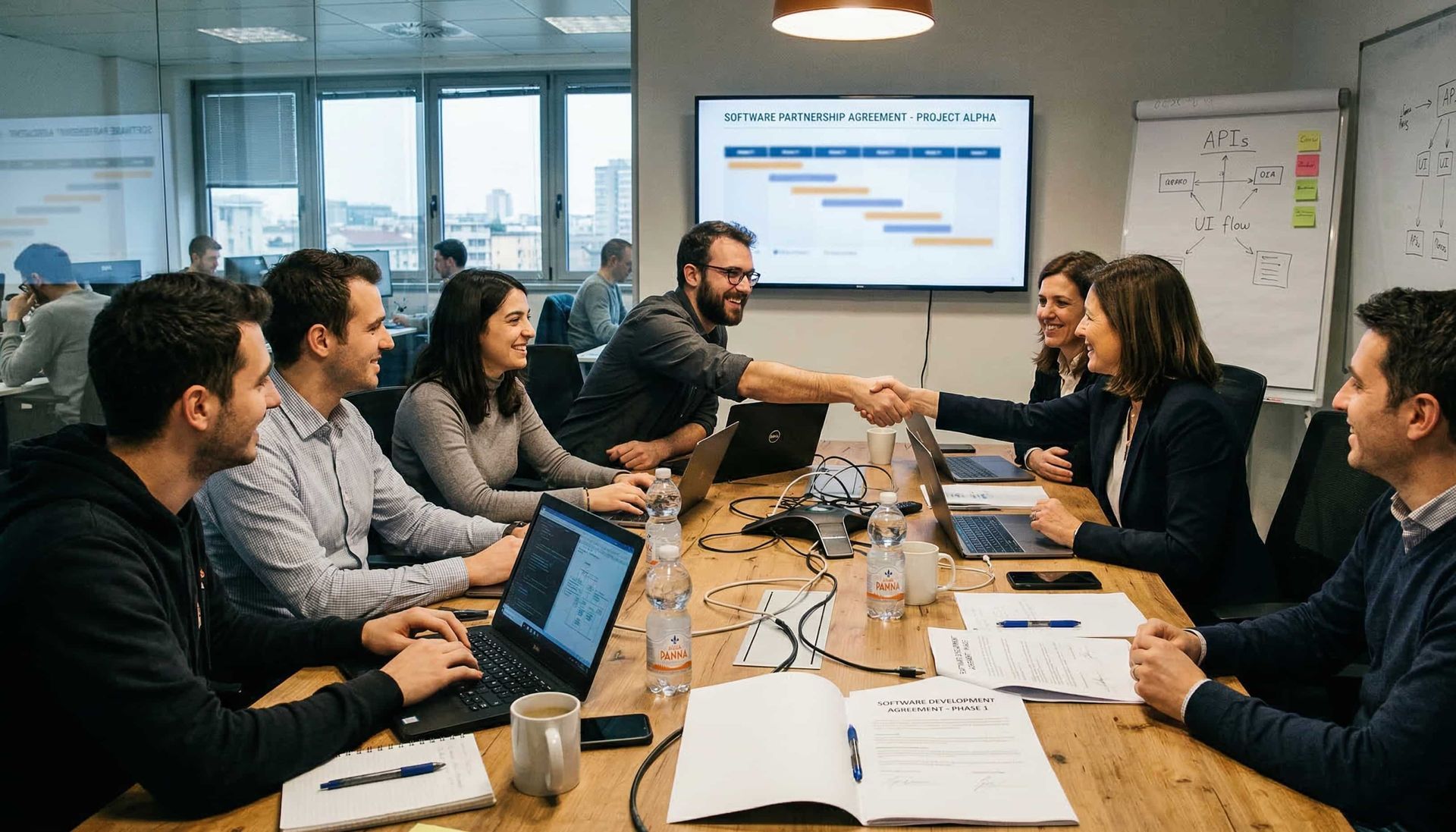
"No contract needed": clear contract with defined scope, milestones, deliverables, IP ownership. It's not lack of trust, it's professionalism.
The real cost? Not investing enough
Poorly made software costs much more than well-made software:
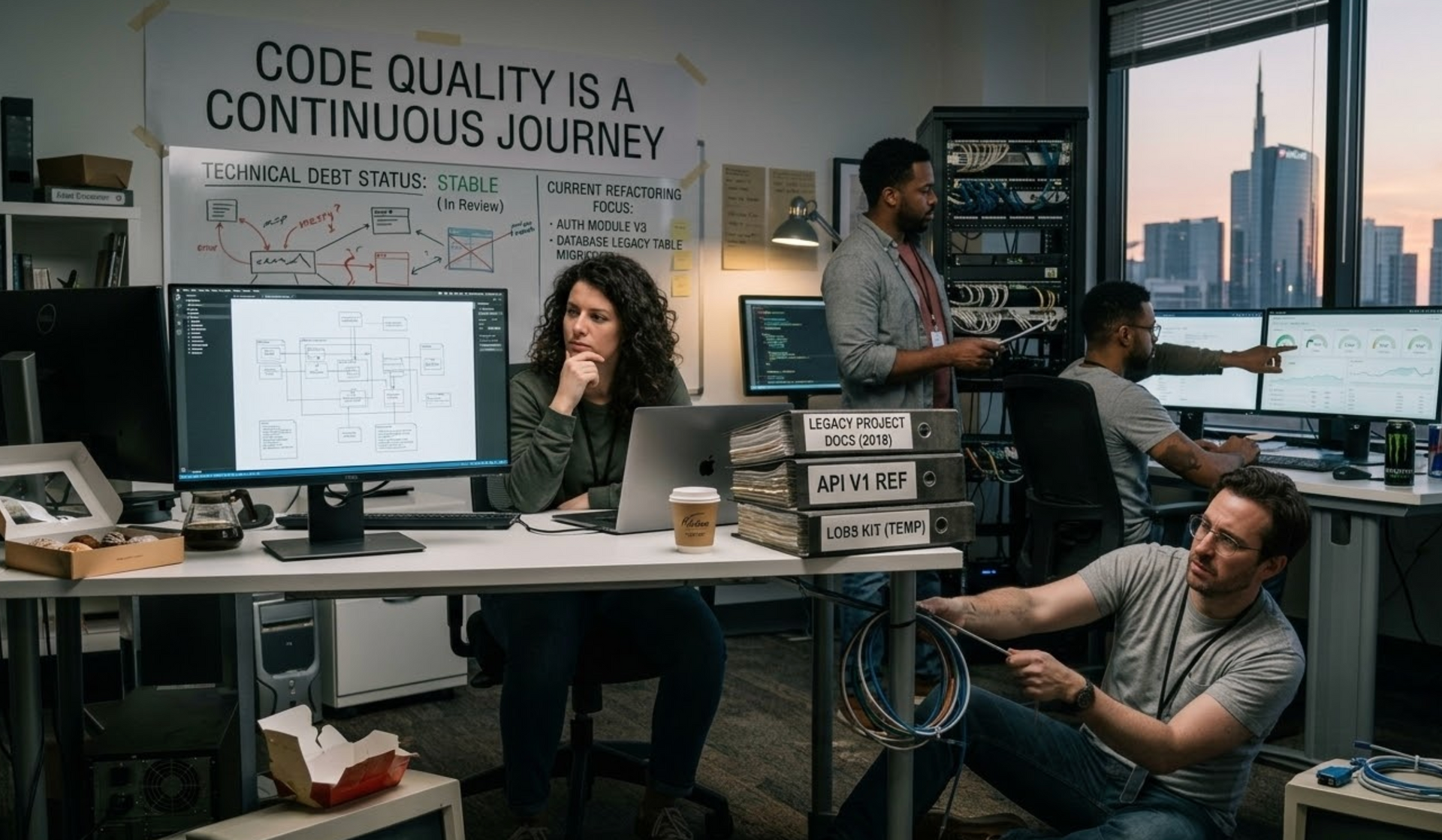
- Total refactoring after 12 months: €20,000-40,000
- User loss due to bugs: impact on revenue
- Security vulnerabilities: GDPR fines up to €20 million
- Inability to scale: lost opportunities
The right question isn't "how much can I save?" but
"how much can I afford to invest to do things right?"
How Huulke makes all this sustainable
At Huulke we've built a model that allows you to have enterprise quality at sustainable costs:
- Dedicated senior teams at €2,000-2,200/month instead of €5,000-7,000 European
- Total flexibility: activate resources even just for one week
- Italian coordinator who manages coordination and quality
- No hidden costs: infrastructure, PM, coordination included
Result? Projects that would cost €80,000-100,000 in Italy we deliver at €40,000-50,000, same quality and faster timelines.
If you're planning your 2026 budget for your digital project, let's talk. We'll help you build a realistic plan that doesn't leave you with surprises halfway through.
Because the best investment isn't the cheapest one.
It's the one that gets you to the finish line.